
The FIFA World Cup hasn't even kicked off, but corporate sponsorships are already evoking strong reactions online. Brands have carefully planned their campaigns, but fragmented online networks ultimately dictate how messages land across regional, cultural, and political divides, as we’ve witnessed with LEGO and Coca-Cola.
To help corporate communications and brand safety teams navigate this complexity, Graphika uses Deep Research: a tool that goes beyond raw volume of mentioned terms and static keywords to analyze community stance, track specific narratives being amplified, and identify influential voices driving them. Deep Research monitors these dynamics in real time.
Read on for a sample of Deep Research-enriched insights into two World Cup sponsorships.
Key Findings:
- Cross-Platform Fragmentation: Even universally celebrated campaigns can comprise parallel, independent conversations, segmented by aspects like fan interests, politics, and local social concerns.
- Granular Analysis for Better Brand Decisions: Defining distinct conversations can help empower brands to evaluate organic backlash, coordinated activity, and fan reactions before they scale up or disappear.
- Sociocultural Flashpoints: Global marketing strategies can inadvertently trigger highly emotional cultural flashpoints. Political and activist communities can hijack event sponsorship to drive digital engagement for their own causes, or frame sponsors as prioritizing profit over social concerns.
LEGO x FIFA: Scoring Goals Across the Map
In early April, LEGO launcheda high-profile World Cup promotional campaign and custom FIFA sets of their toys featuring players Lionel Messi, Cristiano Ronaldo, Kylian Mbappé, and “Vinícius Jr.” Deep Research of cross-platform conversations revealed this was a universally celebrated product launch, but one split into parallel conversations according to different interests.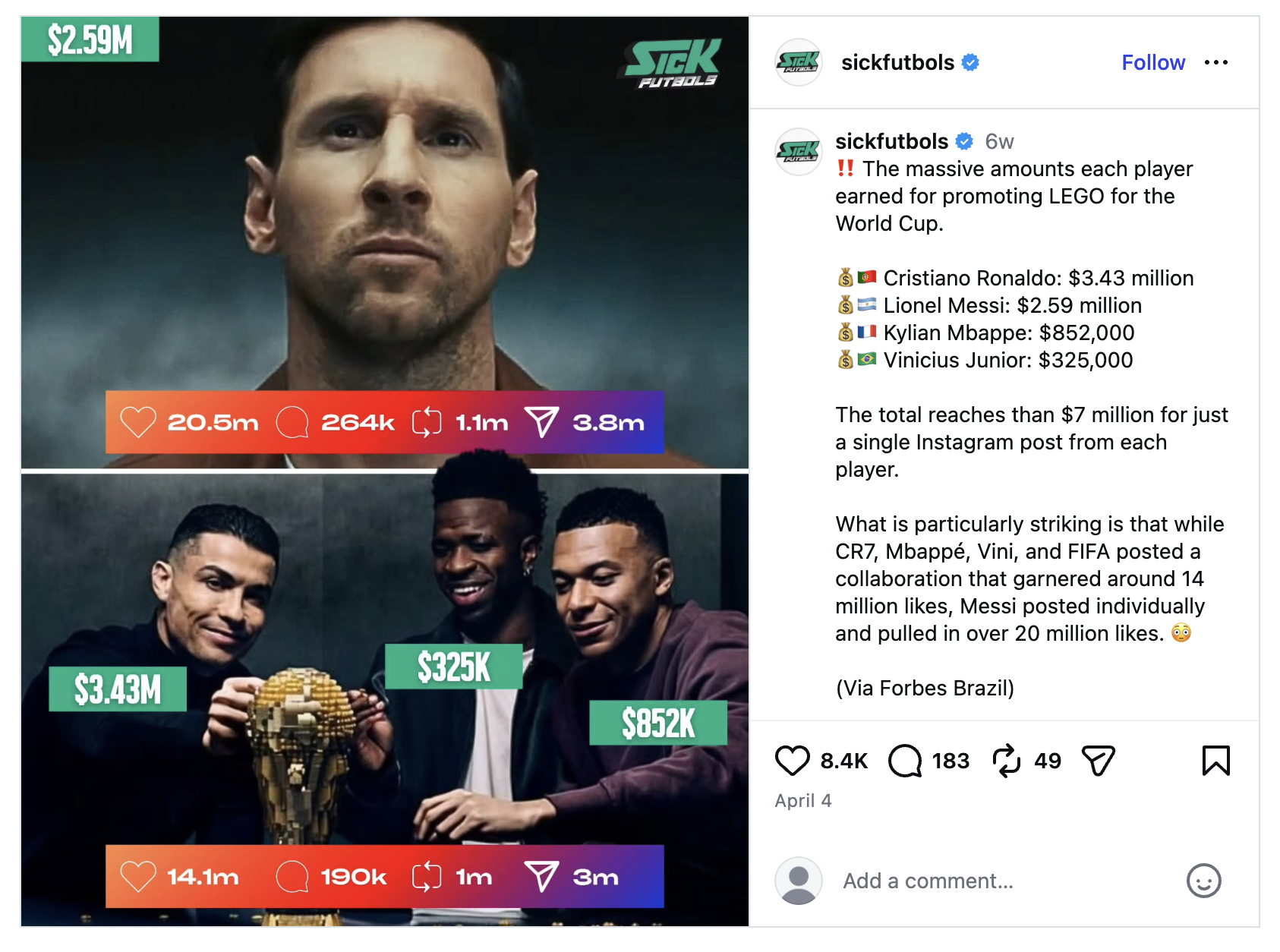
Instagram post from a soccer-focused account discussing alleged LEGO endorsement payments for players, and the social media engagement the players’ promotional posts attracted.
Influential media and consumer technology platforms, including WorldSoccerTalk and Tom’s Guide, anchored this positive narrative by highlighting product preorders and detailing specific features of the LEGO sets. Gaming, lifestyle, and entertainment content creators on Instagram and TikTok also drove strong engagement by showcasing product design elements.
International fan communities devoted to soccer (football, outside North America) widely amplified the campaign on X and Facebook. They called advertisements showing the four players assembling LEGO "historic" and "iconic." On Instagram and X, Spanish- and English-speaking users across the political spectrum expressed positive reactions, such as by sharing an Instagram post from Sports Illustrated Football Club featuring the ad and commenting, "Lego have won the World Cup."
Many users based in the U.S. and Latin America focused on compensation that LEGO allegedly paid the players to promote the toy sets on Instagram – often sharing the same message. Citing $3.2 million for Ronaldo and $2.6 million for Messi, the posts expressed admiration, calling the campaign "marketing de alta gama: simplicidad de formato, complejidad invisible de ejecución" (high-end marketing: simplicity of format, invisible complexity of execution). These networks also celebrated the players' earning power and compared how the players’ respective follower bases reacted to the advertisement.
Coca-Cola x FIFA: Sponsorship Sparks Backlash
Coca-Cola’s World Cup sponsorship involves a multi-pronged strategy that includes trophy tour events, partnerships, and outdoor advertising. Online community reactions have been mixed, and included perhaps unanticipated attention to certain campaign aspects: political and activist communities appropriating physical brand assets to amplify their causes, as well as Coca-Cola and FIFA’s use of historical sites.
Gaming networks and Latin American media and entertainment communities showed enthusiastic reactions online to the global trophy tour, which invites people to see the World Cup trophy in person. However, the outdoor advertising sparked highly emotional discussions related to social issues.
Human rights activists posted a video spotlighting the efforts of Madres Buscadores (Searching Mothers), a group of Mexican women activists searching for victims of forced disappearance, to leverage Coca-Cola’s high-visibility campaign. The video, which showed the group using missing-person flyers to cover Coca-Cola World Cup advertisements near the Azteca Stadium in Mexico City, was reposted more than 3k times.
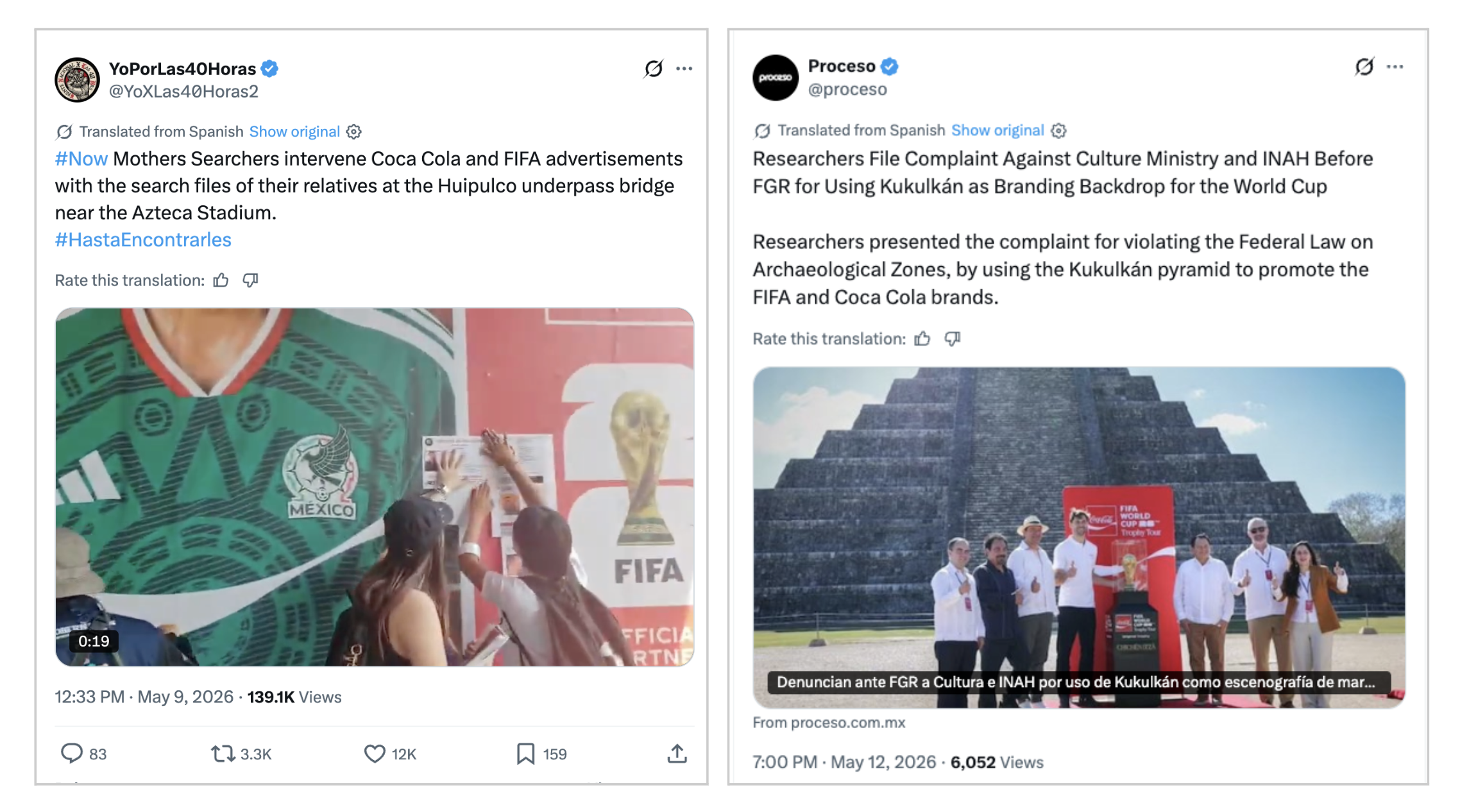
X posts showcasing Coca-Cola’s physical campaign in the context of conversations about commercial profit, social crises, and respect for historic sites.
Latin American right-wing communities – alongside pro-Kremlin and anti-West user networks – used the sponsorship to frame Coca-Cola and FIFA as prioritizing commercial profit over social justice.
Other reactions to the campaign included condemnation of Coca-Cola’s use of historic sites, like Chichén Itzá and the Pyramid of Kukulcán, as backdrops for commercial advertising. On Instagram, popular Mexican digital news outlet SDP Noticias drew attention to the claims of cultural exploitation.
What This Means for Brands and Communications Teams
Traditional media monitoring is no longer enough to protect brands during large-scale campaigns. Brand and communications teams must adapt to several critical realities by:
-
Anticipating sponsorship risks: Before signing a multimillion-dollar partnership, a company should map the digital landscape to identify online communities that are primed to celebrate or oppose it.
-
Tracking narrative drift: High reach numbers can obscure hidden risks. Teams must track how a message is being framed as it migrates, such as from soccer fans to political networks.
-
Detecting crises early: By monitoring the intersections where campaigns meet local protest movements, companies can identify cultural flashpoints and plan their responses.
Protect Your Brand on the Global Stage
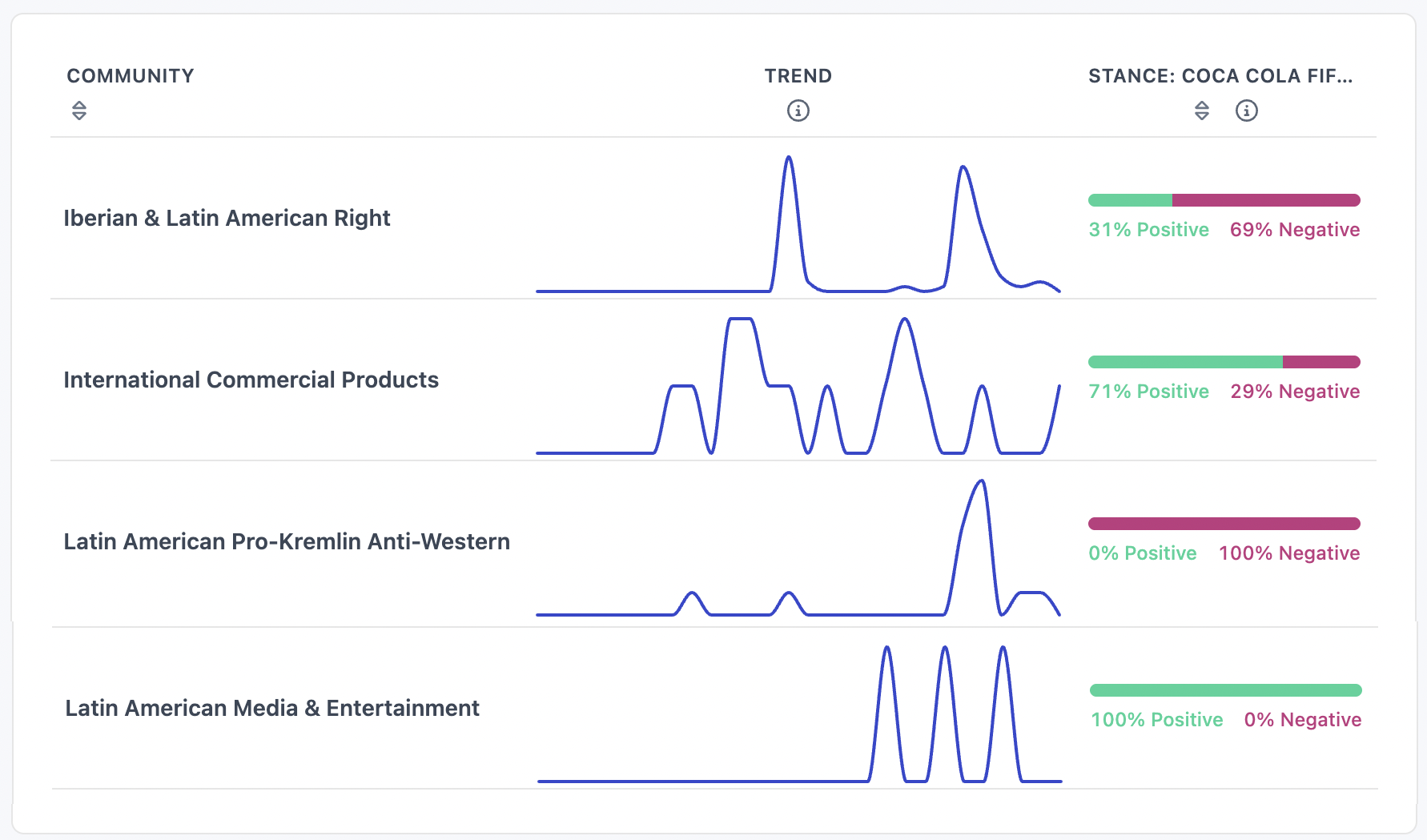
Graphika's clients use Deep Research to produce reports that include this kind of granular detail showing online communities’ engagement and stance on specific subjects.
Traditional monitoring tools tell you how much people are talking, but leave you blind to how your brand is being weaponized or celebrated across fragmented digital communities. Deep Research gives branding teams the strategic map they’ve been missing.
For organizations navigating high-visibility sponsorships, brand controversies, or global event exposure, Graphika offers specialized, real-time threat briefings and custom community mapping.
To see how our Deep Research capability can protect your brand safety and track emerging narratives in real time, request a demo with our team today.