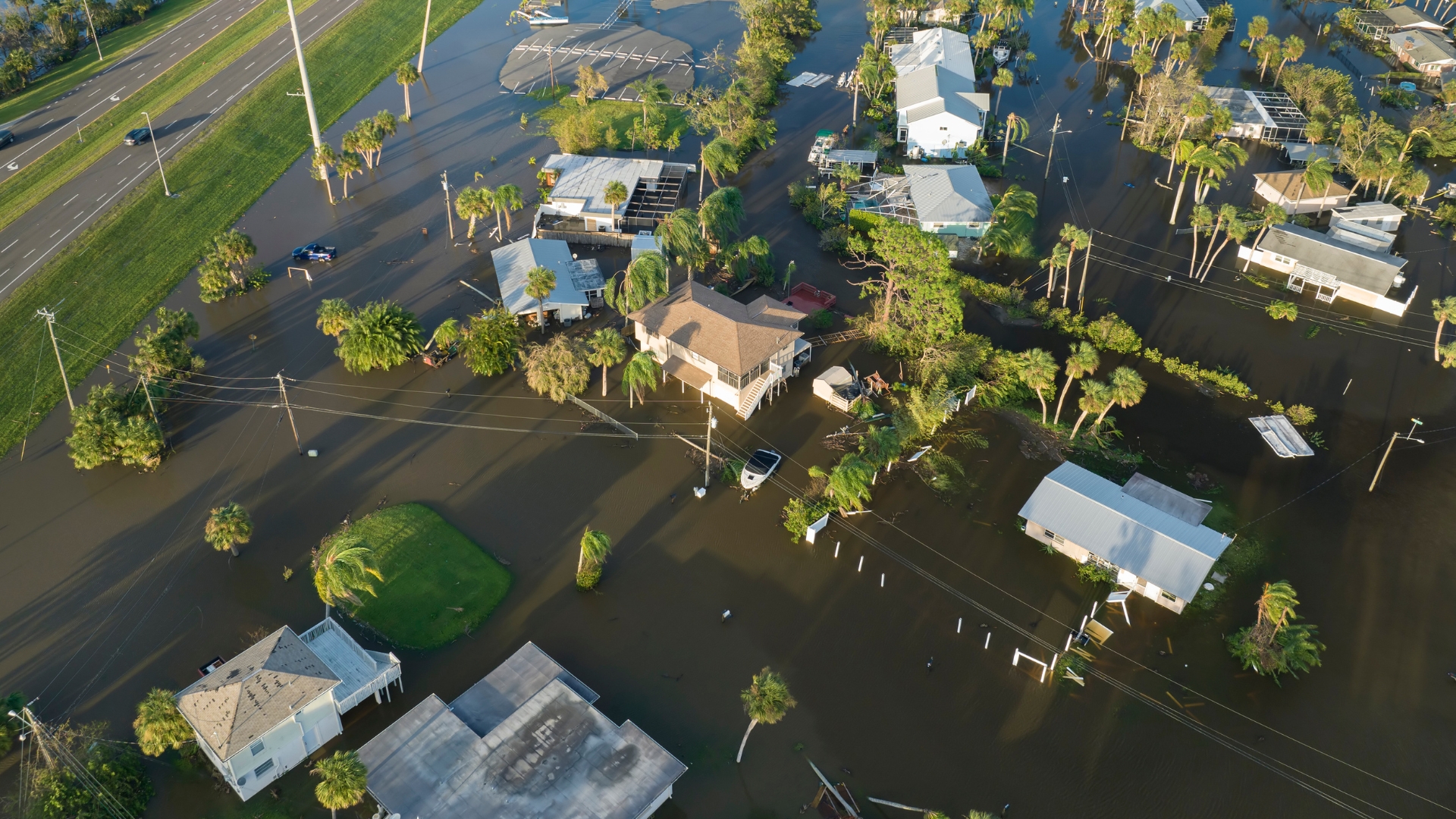
Last Sunday, Graphika founder John Kelly appeared on "60 Minutes" to discuss something our analysts track every day: how radical groups use world events, such as natural disasters, to recruit followers and present their views in a sanitized way. Here's a closer look at what we shared – and what it means for anyone trying to make sense of what they see online when disaster strikes.
Disaster Sites as Breeding Grounds for False Narratives
Online, we all have different information feeds and see different things. Natural disasters are among the few moments when all eyeballs are on the same content. As Dr. Kelly told “60 Minutes” Correspondent Lesley Stahl, "There are very few things that bring the public's attention to focus on one thing in unison, and natural disasters is one of those." They present a ripe opportunity for extremists and state actors to exploit a focused audience and seed alternative narratives.
Radical Groups, On the Ground and Online
When a community is hit by a natural catastrophe, no matter how far away, white nationalist Active Clubs, a growing network of groups disguised as fitness clubs, don't just watch from the sidelines. As “60 Minutes” reported, they activate and travel to affected areas.
We’ve observed them distributing water, food, and other supplies, pausing their standard rhetoric as they position themselves as filling a gap left by the federal government. Simultaneously, they’ve publicized their efforts via content that undermines trust in the U.S. Federal Emergency Management Agency (FEMA) and other U.S. government relief efforts.
The personal appearances and messages extremist groups are pushing don’t just serve to boost reputation and recruitment. They endorse false claims and conspiracy theories that complicate relief efforts – delaying aid – and also pose threats that make it unsafe for federal responders to enter communities.
State Actors Exploit the Same Window
State actors are watching the same moments closely, and moving just as fast. Dr. Kelly shared with “60 Minutes” that after the central Texas floods in July 2025, Chinese state media and pro-China social media accounts portrayed China’s disaster response to their own flooding disasters as superior to that in the U.S. They suggested the U.S. government deflected blame for its own actions and failed its citizens, sharing an English-language video, “Two Floods, Two Realities” across X, Facebook, YouTube, and TikTok, criticizing the U.S. government's lack of “ability to protect its people.”

Example of X posts from prominent English-language users criticizing the U.S. government's disaster relief efforts (left) and posts from likely Spamouflage-linked or pro-China accounts (now suspended) that directly copied the original post to amplify that criticism (right).
During the aftermath of Hurricane Helene, a China-linked online network known as Spamouflage – which promotes anti-U.S. sentiment via profiles posing as Americans – amplified criticism of relief payments. After prominent English-language social media users posted messages inaccurately comparing Helene relief payments to funds designated for aid to Ukraine and Israel, likely Spamouflage-linked and pro-China accounts copied those posts and shared them as their own. Chinese state-linked media, such as Binhai New Area Rong Media Center, also spread the narrative across Facebook, Weibo, and WeChat, further spreading the message throughout Chinese-speaking communities.
False information circulating via foreign influence operations further sows distrust in government relief efforts.
How Graphika Can Help
When attention converges around a crisis, it creates opportunities for extremist groups, foreign actors, and online influence networks to shape perception at scale. For organizations navigating these environments—from government and financial services to media, communications, and online platforms—understanding what’s gaining traction, who is driving amplification, and how narratives spread is critical before momentum accelerates.
Graphika is a Decision Intelligence Platform for complex digital environments, helping organizations understand how narratives spread, where influence concentrates, and what requires attention before momentum accelerates. By mapping the relationships and interactions between online communities—including fandoms, activist movements, influence networks, and foreign information operations—and combining network analysis with AI-powered research, Graphika transforms fragmented online activity into structured, decision-ready insight.
If you'd like to learn more, get in touch.